
Travel Journal (Lucio Magi, January 2004)
My first time in Africa has left a lasting impression.
Almost instinctively, I find myself listening to “Talking Timbuktu”, Ali Farka Touré’s most famous album, and thinking back to the incredible journey that ended little more than a week ago.
One of the things that struck me most about Mali was the intensity with which sounds, tastes, and colors are experienced.
The sounds of Africa are not something you easily forget.
One night, in the Dogon village of Banani, after pitching our tent on the flat roof of one of the mud houses, everything was quiet. Following a day spent hiking at the foot of the escarpment, the only sounds were those of our hosts preparing dinner and the local boys still trying to sell a few masks to the handful of tourists in the village. Then, suddenly, after sunset, we were engulfed by voices and drumming coming from a funeral vigil in the upper part of the settlement. The rhythm of the drums and the hypnotic chants accompanied us throughout the entire night. Although they probably robbed some people of their sleep, I cannot imagine a better way to spend our last night in Dogon Country.
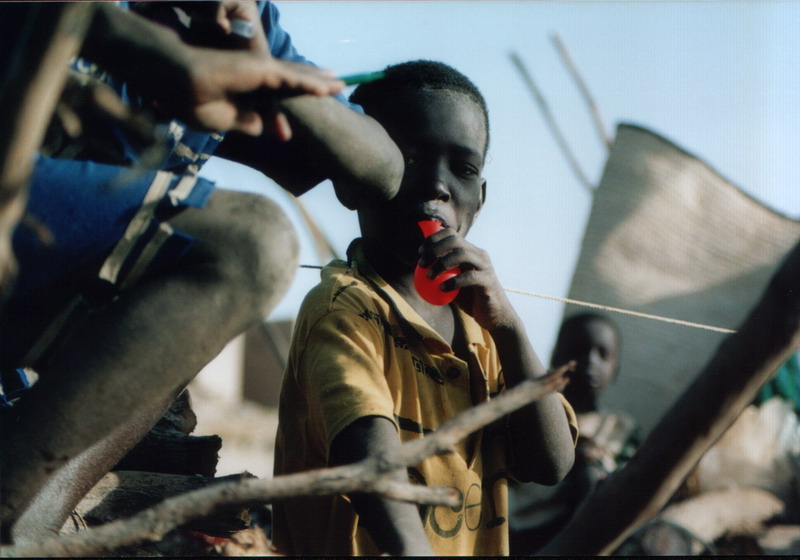
baloon
The music of Africa, which I have loved for as long as I can remember, is even more beautiful when heard live.
One evening we ended up having dinner at one of the restaurants along the Niger River in Mopti. We had chosen the place almost at random, with no particular reason in mind, but once again luck was on our side. As the evening went on, the patio began to come alive, filling with local people gathering around a very long table for a celebration. Everyone was wearing their finest clothes, mingling with backpackers in Peruvian wool hats and other tourists dressed up in their best “safari” outfits.
Then a band arrived and started playing live music, and to say that it was captivating would be a serious understatement. After dinner I found myself leaning against the foot of a staircase, unable to tear myself away as I listened and tried to follow the rhythm.
It was simply wonderful.

djenne
What can I say about the scent of spices in the markets, the sweet fruit juices that so often accompanied our meals, or even the less pleasant smells, at least for us Europeans, such as fish left to dry in the fishermen’s villages and along the ports of the Niger? They became part of our memories before we even realized it, without ever asking our permission.
Yet I believe that nothing will stay with me more vividly than the colors of this land.
During the day everything is bathed in an intense, almost blinding light, and only in the early morning or at sunset can the full richness of the colors truly be appreciated. The thing is, even when hidden, the colors are always there. It is impossible not to notice them.
The red earth of the savannah among the giant baobab trees, a landscape that often reminded me of the Australian bush, blends at times with the colors of the desert as it advances relentlessly. Even the dust is everywhere, with its almost neutral hue, as if it had been placed there on purpose to help the light restrain the explosion of all the other colors.
The women’s brightly coloured clothes, the multicoloured plastic buckets balanced on their heads, the blue turbans of the Tuareg, the rainbow of Djenné’s market and Mopti’s river port are images that alone make every hardship of the journey worthwhile.
I like to think that people face the many difficulties and challenges of this land with the help of color as well. There is a joy, a warmth, and a simplicity in Mali that touched me deeply. Everywhere we went, from Bamako to the villages of the nomadic fishermen along the Niger, we were never denied a smile or a friendly greeting.
I believe that this journey is not merely a way of learning more about fascinating cultures and admiring breathtaking landscapes up close. Nor is it simply an opportunity to make a small contribution to the projects that local volunteers pursue so courageously despite countless obstacles.
Above all, this journey has been a chance to meet and learn from an extraordinary people, and to discover just how much we still have to learn from one another.
I’ve already fallen under Africa’s spell.
The Sotramà – Lucio Magi (January 2004)
One experience that should not be missed in the capital of Mali is a ride on a Sotramà.
Ada and I, together with the more “experienced” Michele, ended up on one almost by accident after two taxis were called instead of three, and we needed a way to catch up with the rest of the group at the artisans’ market.
Sotramà is the name given to the shared minibus taxis that effectively serve as the city’s buses in the Bamako urban area. A description of the vehicle itself, a green-painted van whose ability to keep moving is often open to question, would deserve a chapter of its own. What truly makes the fare worthwhile, however, is the service provided.
When we climbed aboard, we were the only three passengers. The door-man, the local equivalent of a ticket inspector, ushered us in while muttering a few incomprehensible words in the Bambara dialect. The door-man, as the name itself suggests, literally serves as the van’s door, which, along with the window glass, is entirely nonexistent.
His job is to use his own body to prevent passengers from getting on or off without paying the fare. Besides that, he also acts as a sort of recruiter. Throughout the journey he shouts the route and final destination to pedestrians, hoping to attract as many passengers as possible. Competition between vehicles is fierce. The vans follow each other at extremely close range, practically bumping into one another, and it is not uncommon to see two door-men arguing or even fighting over potential customers.
As it crawled along the road, the van gradually filled up. Then, once nearly full, it suddenly launched itself at breakneck speed down one of the many unpaved, pothole-ridden roads. Remaining seated without hitting your head on the roof or being thrown forward into another passenger’s arms is an achievement that requires the full use of both hands.
One hand must grip the wooden bench on which you are sitting, while the other is needed to hang on to one of the metal bars running along the roof in order to stay upright. When, under these circumstances, one of the women seated nearby began breastfeeding her child, I truly felt like a helpless tourist far from home.
Meanwhile, people continued getting on and off, sometimes carrying enormous sacks that inevitably had to be squeezed under everyone’s feet. At one point, and I swear there was no room left inside the van, the door-man, who was in fact only a twelve- or thirteen-year-old boy, managed through sheer experience to find space for two more passengers by forcing everyone else to squeeze together beyond what seemed physically possible.
Or so I thought.
A minute later, defying the irritation of all of us already on board, he somehow managed to create enough space for one final passenger. Fortunately, our stop arrived shortly afterwards. As you can easily imagine, however, getting out of a Sotramà is no simple task.
Bent nearly double to avoid hitting our heads, trying at the same time not to step on other passengers’ feet or on the sacks piled on the floor, and terrified that the vehicle might pull away before we could escape, we finally managed to climb out.
That’s part of the charm of this country too…